 English
 한국어
 日本語
 Русский

Both Hospitals, One CaseAilix Suite connects a hospital abroad and a Korean hospital around each patient: translated records, a shared schedule, and video visits in each person's language.Visit ailix.meninblox.com ↗
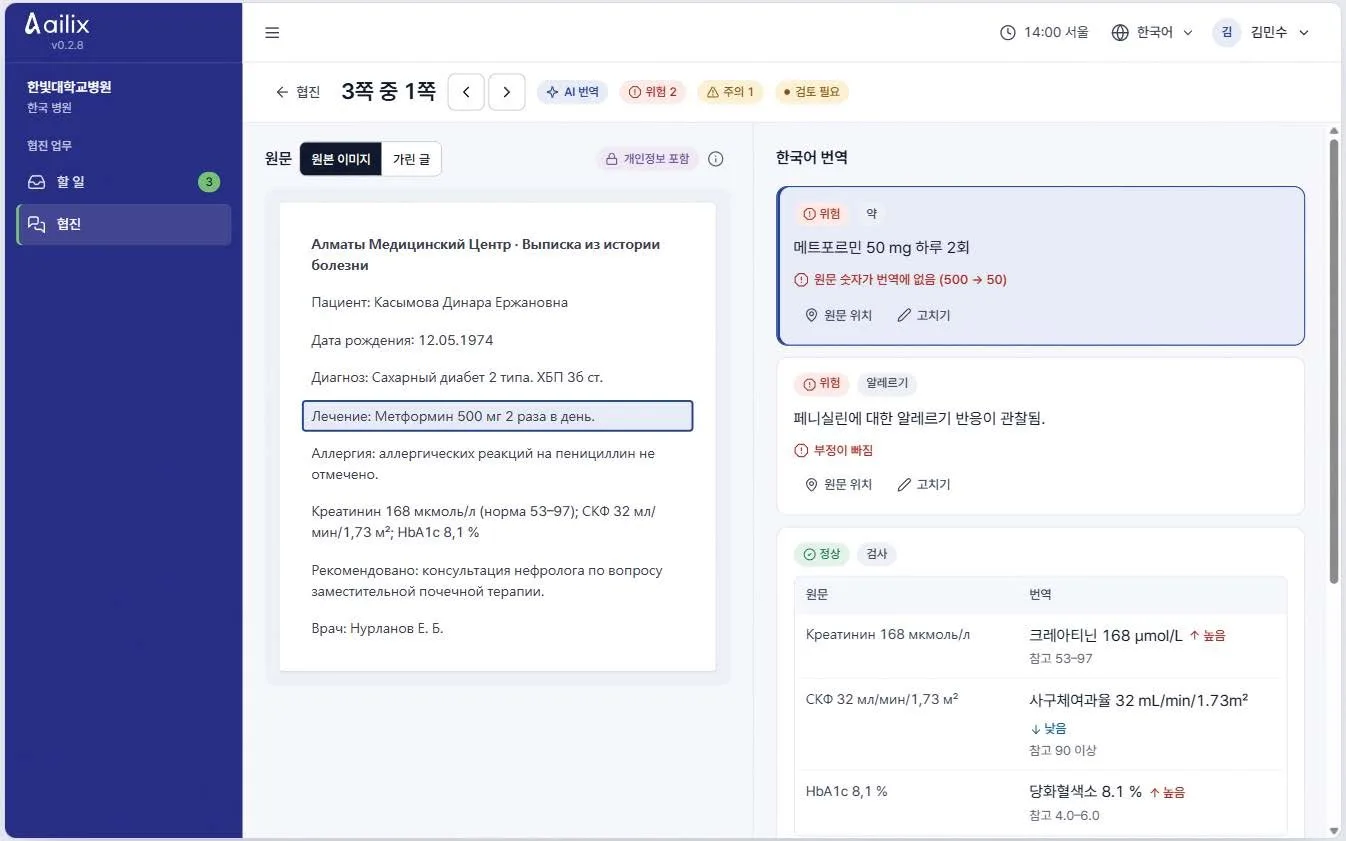
More international patients, yet co-care is still hard.
- RecordsRecords arrive in the local language, often by hand, and translations can't be checked against the original.
- LanguageMedical interpreters are hard to find, and translation apps often get important things wrong.
- AgenciesPatients come through agencies that take a fee from the cost of care.
- Follow-up · PrivacyRequests, schedules and records scatter across email and messengers, and no one knows who sent or opened them.
Five things, one service
- Records beside the original
- Interpretation in 12 languages
- Direct requests
- One place for contact
- Names masked
In 2025, 2.01 million patients from 201 countries were treated in Korea. With Ailix Suite, the hospital abroad sends a case straight to a Korean hospital, and records, the schedule, chat and the video visit stay in one place. Automatic translation and interpretation support clinical judgment. They do not replace diagnosis.
Key features

From request to visit
- The hospital abroad sends the request directly. Records, the schedule and chat stay in one case, times are shown in both hospitals' time zones, and the video visit opens there too. Video is not recorded.

Automatic translation beside the original
- Each record page is translated into Korean beside the original, with likely number and drug-name errors marked. Chat, voice and video are interpreted into each person's language, in 12 languages (MedicaVox).

Names masked before translation
- Medical records, opinions and summaries go for translation only after names, dates of birth and contact details are masked, and identifying data is encrypted separately. Data is stored in Seoul and processed only in the countries the patient consented to, and every action is logged for five years.

ailix Codex medical dictionary
- Every translation and interpretation uses this dictionary: 1,651 medical concepts, 12 languages and 43,894 names and synonyms, with 3,160 test items every change must pass.
How it works
Step01 · Hospital abroadPrepare records
Register the patient, collect consent, and upload recordsStep02 · Korean hospitalArrange a consultation
Accept the referral, assign a doctor, and confirm the timeStep03 · Clinicians · patientsJoin the session
Talk in your own language and review the session record
Benefits for each side

Hospitals abroad and patients
- Ask a Korean hospital directly, with no agency in between
- Referring hospitals and patients pay no ailix fee
- Join from a browser, with no app to install
- Results can be translated back for your doctor at home

Korean hospitals
- Pay for what you use, in credits (1 credit = KRW 100, VAT excluded)
- Export doctor-confirmed records in HL7 FHIR R4
- Hospital users sign in with two-factor authentication
- Move translated records into your hospital EMR
FAQ
Do hospitals abroad or patients pay a fee?
No. Referring hospitals and patients pay no ailix fee. The Korean hospital pays per use in credits (1 credit = KRW 100, VAT excluded).
Do patients and doctors abroad need to install an app?
No. They join from a web browser.
How is patient information protected?
Records, opinions and summaries go to the translation service only after names, dates of birth and contact details are masked, and identifiers are encrypted separately. Data is stored in the Seoul region, video visits are not recorded, and an audit log of who did what and when is kept for 5 years.
Can records move into our hospital EMR?
Records confirmed by a doctor can be exported in the HL7 FHIR R4 standard, and translated records can be mapped to your hospital's EMR.
Does automatic translation replace diagnosis?
No. Automatic translation and interpretation support clinical judgment. They do not replace diagnosis.
Bring cross-border co-care to your hospital
Features, pricing and the user guide are on ailix.meninblox.com. Request a consultation and we'll walk you through setup for your hospital.